Owain & Henry. Wales Millennium Centre, Cardiff. 14 November 2026.


When I set up Review Culture in January 2020, I decided categorically that I would limit the scope of my reviewing to live shows performed in and around Lincolnshire. However, every now and again something happens that makes me want to challenge that. As its my site and I make the rules, I have decided to break that rule in order to review Gary Owen's new Welsh drama, Owain & Henry currently on at the Wales Millennium Centre in Cardiff. At the time of establishing Review Culture, I was studying for an MA in Theatre at the University of Lincoln. My final project saw me write a dissertation entitled The Dark Little People, an analysis of how Welshness is performed on stage using four relatively contemporary plays as a point of reference. After successfully graduating from the MA, I was invited to study for a PhD pursuing the same notion in greater depth and with a much wider scope. As a result, I wrote The English Gaze: How national identity is negotiated in contemporary Welsh Anglophone drama. That work is currently under consideration for publishing by the University of Wales Press. Over the four years of study, I witnessed the decline and fall of the Welsh National Theatre and just as I was completing my work, a new Welsh National Theatre led by actor Michael Sheen was announced and I considered how the news might feed into my thesis before submitting it.

The first play announced by WNT was Our Town by Thornton Wilder, an unusual choice given its status as a beloved American staple. The second would be a bold, epic production about the life of the last Welsh-born Prince of Wales, Owain Glyndŵr. So it was, Gary Owen the writer of my favourite play Iphigenia in Splott, was commissioned to create Owain and Henry for the Welsh National Theatre. I bought a ticket to see Our Town at Theatr Clwyd when it opened this year, but was thwarted when I was called into hospital for a knee replacement. And so I bought a ticket for the current production, determined to see tis monumentally significant piece of Welsh Anglophone theatre.

Firstly, I had forgotten just how big the WMC in Cardiff actually is and feared I would be rather distant from the production, sitting in the gods when I am so used to seeing productions close-up and often through the lens of my camera. However, the production made maximum use of the space available and the distance almost instantly became insignificant once the action began. The playing area was dominated by a series of steel girders, quite out of keeping with the historical nature of the play but a link to the nation whose steel helped build the modern world and perhaps an affectionate nod to Sheen's home town of Port Talbot.

The girders when lit helped to cast cinematically dramatic shadows across the playing area of a stage constantly morphing to take us from the Royal Court to battlefields, parapets and beyond as tables and towers were brought on stage to create new scenes time and again, offering different levels that played with the notions of strata within society. Giant banners draped the stage with royal standards or the standard of Glyndŵr himself, emphasising the spectacle of the show.

The large cast dressed in appropriately practical period clothing added to the scenes, as did the rear projection onto screens that effectively portrayed the burning of Chester in a particularly memorable scene. Little will match the spectacle of Sheen grabbing drapes to form dragon-like wings illuminated by red light and haze to evoke the spirit of the Welsh dragon at the close of the first act, on the day that Wales beat New Zealand at rugby for the first time in 73 years, after staging an equally impressive piece of theatre in response to the All Backs' haka, known as The Dragon's Breath.

Everything about this production oozed aspiration and ambition for the nascent national theatre. The entire audience seemed ready to receive the myth and legend of Owain Glyndŵr, something rarely taught in Welsh schools. Glyndŵr's story has had the epic treatment previously in the Welsh language rock opera Y Mab Darogan (The Son of Prophecy) which celebrated it's 40th anniversary just a couple of years ago with a very successful tour of Wales. But this particular production, co-directed by Sheen and Steffan Donnelly is significant in that it tells the story in an highly effective, contemporary fashion, in English.

There is no getting away from the fact that Owain & Henry aspires to grand theatre status, as a modern Shakespeare-like piece of theatre which feels incredibly familiar as a result. even the roster of players carried names all too recognisable, Henry IV, his son Hal (Henry V), Sir John Falstaff and Hotspur, not to mention "Owen Glendower" as the English court insists on calling him, deliberately mispronouncing his name. Does it succeed in it's ambition? Not entirely. There is a very clear message of the strength and resilience of the Welsh and the English antagonists are almost pantomime-like in their villainy - which could alienate an English audience raised on the old myths of English exceptionalism. Where the play really does succeed is in the performance and staging. The casting is superb and showcases the depth and level of talent within the Welsh acting community. One of the criticisms of the former National Theatre Wales was that it was reluctant to offer opportunities to Welsh creatives and Welsh actors, that is most certainly not a criticism that can be levelled at the new Welsh National Theatre.
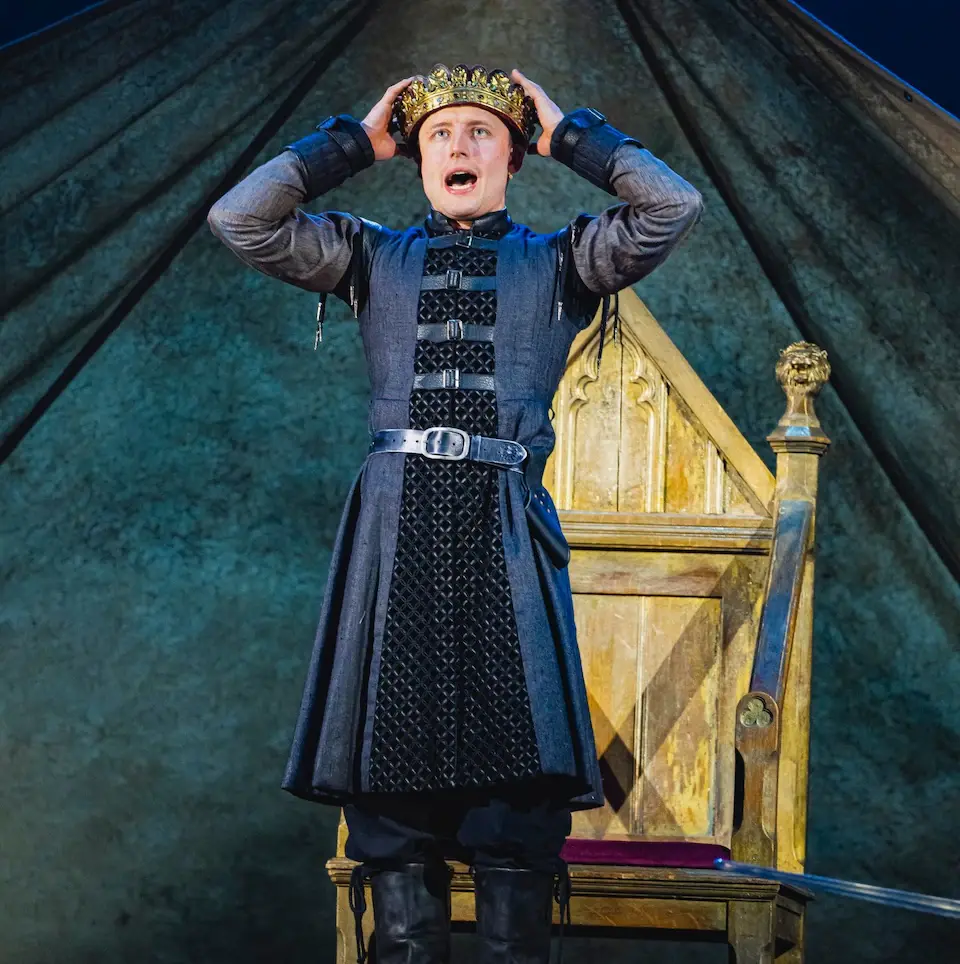
And so, to the cast. The production features 25 actors on stage, led by Michael Sheen as Owain and Nigel Barrett as Henry. Sheen is totemic in his performance of Glyndŵr. Initially reluctant to lead a rebellion of any sort, he succumbs to the influence of his Lady Macbeth-like wife, Mared (Rakie Ayola), a woman with a clear vision that Glyndŵr is indeed the Son of Prophecy destined to lead Cymru to glory. The manner in which Sheen steps into the role suggests he has wanted a part like this his entire career. He is imperious and inspirational and there can be few audience members not willing to follow him once he declaims his cause. Understandably in a production like this, Glyndŵr is presented as the legendary leader but it does not shy away from his initial fealty to the monarchy when he orders the death of three men at the behest of Falstaff, but we see Sheen's Glyndŵr agonising over the act later. The inner conflict is presented superbly and Ayola's Mared is the little voice in his head urging him to rebel and take up his true position as the true Prince of Wales. When he rises up and delivers the call to arms, it is no surprise that men, women and children were prepared to follow him.

Nigel Barrett joined the company late after Linus Roache had to withdraw from the role due to ill health and he performed magnificently, never dropping a beat as Henry seeks to disempower the Waelisc (the Welsh) and unite the kingdom under his influence. To that end, he fires Glyndŵr, who had previously enjoyed power and wealth under King Richard, and promoted his rival Reginald Gray. Barrett's Henry is the perfect foil within this play to Glyndŵr as both men are rebels at heart, conflicted by their actions, though one rose to greater power and influence than the other. Barrett portrays Henry as a man with doubts that he had taken the right path but now he is King, he has to take decisive action to maintain power. Given his late arrival to the company and the way in which he seamlessly blends into the production, I would suggest that this is a career defining moment for Barrett.

Rakie Ayola as Glyndŵr's wife Mared is wonderfully manipulative, perhaps lacking some of the poisonous ambition of her theatrical predecessor Lady Macbeth, though strong and assured and a woman with a voice that deserves to be heard. Ayola's presence never disappoints and the manner in which she portrays Mared is both regal and powerful. One can see why Glyndŵr and his wife were so well-matched.

As Hal, the future King Henry V, Ned Costello serves up a vastly different character than we see in Shakespeare's histories. Here, Hal is a cross between Shaw's Dauphin in St Joan and a psychotic football hooligan who enjoys inflicting pain and misery on others unnecessarily. Costello offers a King in waiting eager to overthrow his own father who fails to appreciate his military prowess and will not grant him permission to execute his plan to conquer the Cymry by any means necessary (the more bloody and painful the better). Costello walks the line exceptionally well between the downtrodden son and the blood thirsty ambition.
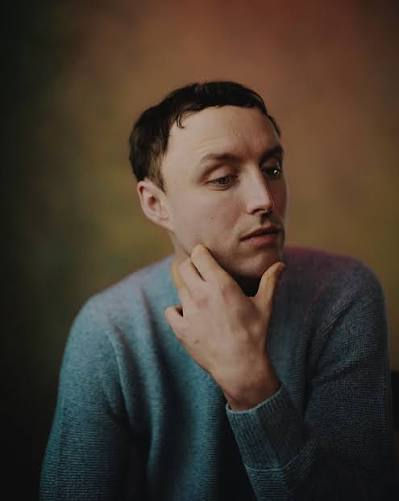
The final performance of note I want to mention is that of Sophie Melville, an actress that I personally adore and have done since her early work at the Sherman Theatre and believe that she is a national treasure in Welsh Theatre. Melville plays Lois, a widow who takes up arms after the murder of her husband, unaware that it was Glyndŵr who ordered his execution. She becomes a loyal soldier fighting for Cymru and the Cymry in fierce memory of her husband. Melville brings a rich and powerful depth to the role and is magnetic when on stage. She richly deserves the exposure and praise this production should bring her.

The blend of mock Shakespearean grandeur and physical theatre in Owain & Henry is magnificent and the use of song is hauntingly beautiful with the exception of a rendition of Jerusalem by Hal, performed whilst swigging lager from a tin, in a curiously, anachronistic moment that jarred as the play sought to ground itself in it's period. I have some reservations that the play tried a little too hard at times to represent Wales as the heroic little nation that could, because in reality, it could not. Many of those instances will perhaps alienate audiences that do not wish to hear tales of Welsh national pride, but nevertheless this is a story that resonates in the modern world and still has so much to say politically.
The production is impressive in scale and scope. The use of sound, light and projection and John Bausor's ever fluid, constantly changing set paints many memorable pictures, the exceptionally evocative lighting burns images into your memory, but it is the performance of the actors that shall remain. I was delighted to have seen this ground-breaking production which is so significant in the history of Welsh Anglophone theatre as it seeks challenge and oppose the influence of the English Gaze under which professional Welsh theatre has existed for so long. Cymru Am Byth.

Andy Evans 19 November 2026


Comments